
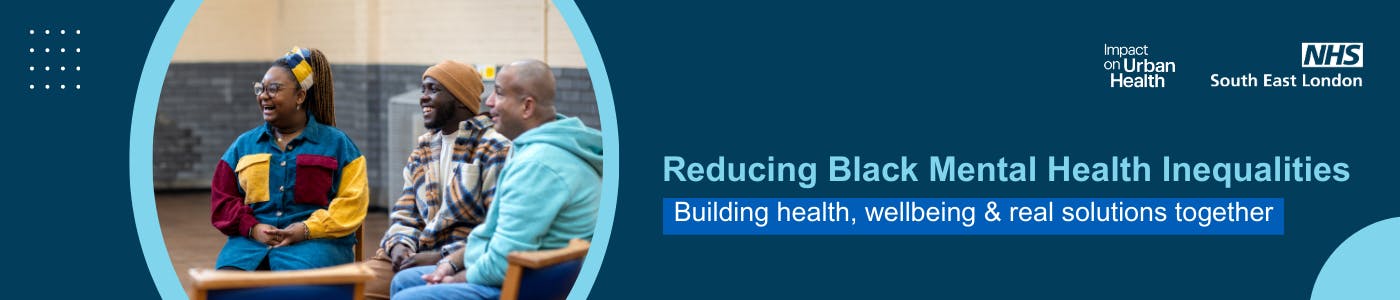
Reducing Black mental health inequalities - building health, wellbeing and real solutions together
The Black Mental Health Community Action Workshop ran on Thursday 12 March at St George's Cathedral Southwark. The event was convened to:
- Imagine and describe what affirming mental health care looks and feels like for Black communities in southeast London
- Work together to map out how we get from where we are now to that vision—including the changes, actions, and partnerships needed
- Identify practical ideas that could be developed further and funded as next steps
The event brought together over 90 people from across SEL’s boroughs, the majority with lived experience, and including clinicians, commissioners and service providers from the NHS and VCSEs. The solutions to mental health inequalities experience by Black people that were co-created at the workshop will be developed and evaluated by an Expert Reference Group comprised of people with lived experience, By/For VCSEs and change advocates within the NHS, in order to create a grant-making opportunity later this year.
We look forward to sharing outputs from the workshop shortly and will update this page as soon as they're available.
Introduction
In 2026 NHS South East London is partnering with Impact on Urban Health to improve mental healthcare for Black communities in our boroughs. This programme forms part of a partnership between the two organisations that is committed to sharing power with communities to design solutions to health inequalities, collaboratively allocate funding, and oversee delivery of initiatives. Through 2025, we have been delivering a similar programme of work addressing Black maternal health inequalities, which you can read more about here.
Background
We know that Black people have poorer access, experiences and outcomes in mental health services. For example, the 2018 Race Disparity Audit reported that Black men are more than ten times as likely to have experienced a psychotic disorder within the past year as White men. However, Black adults are the least likely to receive treatment for a mental health condition – whether medication, counselling or therapy – and are the most likely to have been detained under the Mental Health Act.
Distrust in the mental health service in Black communities is reinforced through experiences of greater rates of enforced admission to psychiatric wards and harsher treatment during detention.
What we are doing
We have created a Black Mental Health Expert Reference Group that will act as the key strategic decision making forum for the programme. The group includes people with lived experience, VCSE leaders (including Black Thrive and Ndukauba CIC), NHS clinicians and commissioners, and academics. We will work with the group to co-design the agenda for a solutions-focused workshop which will be open to people with lived experience. At the workshop we will collaboratively design solutions to Black mental health inequalities to be considered for inclusion in a funding opportunity that we will launch later in the year.
How you can get involved?
To be kept informed about the workshop and the wider programme, please sign-up using the form below.
| Sign up form |